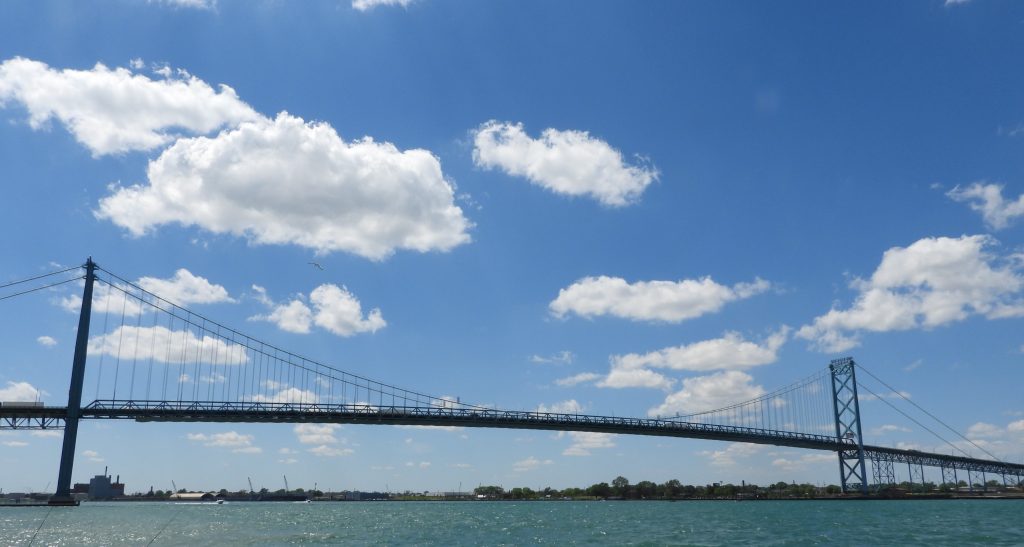
I have always been fascinated by the appearance and shape of bridges, whether they span a short distance or extend for miles. Sometimes, the shorter bridges attract me more, like the Old Bridge in Mostar or the bridge over the River Drina in Višegrad, Bosnia and Herzegovina. Although I graduated from the Faculty of Civil Engineering, bridges were not my initial inspiration for pursuing a career in the field. However, my graduation project focused on a 160-meter railway bridge, and at that time, I was enthusiastic about building bridges as part of my career.
Since then, I have been involved in the design of two small bridges and the reconstruction of an old bridge in Macedonia. After moving to Canada, I never had the opportunity to work with companies focused on bridge construction. I do not regret this, as the way I envisioned building bridges in my youth is no longer how I want to be involved. The industry moves quickly, often with little room for creativity; for specific spans worldwide, the same methods are used, making it feel like a copy-and-paste process.
Despite everything, my love for bridges remains strong. I still feel a thrill whenever I see a bridge from the side or take photos of one. The following story, “Bridges,” comes from my second book and is inspired by historical figures. I used my imagination to develop the story, which does not pertain to any actual events that occurred a long time ago.
Bridges
In the 16th century, a bridge was built on the Drina near Višegrad. A bridge that crossed the Drina River connected the Ottoman Empire’s two provinces. Bosnia is the farthest one in the west, with the rest of the empire. The bridge is an endowment of Mehmed Paša Sokolović, and the bridge’s construction was entrusted to the court architect Mimar Sinan.
In his eighth decade, an old architect, Mimar Sinan-aga, welcomes his esteemed guest, Mehmed Paša Sokolović, at the door of his home in Stambol. It had already been three years, and it could be four years, since Mehmed Pasha became Grand Vizier, and such a visit was a great honor for old Sinan, one of the greatest architects of that time. Sinan had an apparent and sharp look, and by the expression on his face, despite his gray hair and beard, he looked much younger, almost like a peer to his guest, who was about twenty years younger. After saying hello, the two sat in the architect’s chamber and began conversing.
“Would you like to build that bridge?” – he asked the architect, stroking his long white beard.
“Yes, I would like to build. I want something to be left behind, something for which people, both these and those who come after my death, will remember me,” Mehmed Pasha answered with strong confidence in his voice.
“Okay, as you say, I’ve made some sketches, so it would be good for you to take a look. As indicated on the map, this is the most suitable place to build a bridge. As you requested, I looked at this place, Višegrad. I checked the sketches of my students from the field, around the place on both sides, and it seems to me that it is best to build here, a little further upstream from the lowland where the Drina is now crossed.”
Mehmed Pasha unfolded the map, looked at the marked place, thought for a moment, and said:
“I agree. It’s convenient to build there.”
The host, pleased that his guest, known for his sharp and arbitrary character, accepted the idea of a place for the construction of a bridge without opposition, just as eagerly answered, said:
“Come on, let’s have a cup of coffee. “I’ve got a lot of tobacco, so let’s get to the details.”
The vizier respected the architect because he was one of the few people close to the sultan and had been in the Porte for a long time. And the vizier was famous throughout the empire, as one of the few who suppressed revolts and unrest, where even the hardened and strongest could not. With his stature and height, he was awe-inspiring in those around him, and to have an ally and friend like old Sinan was certainly both an honor and a privilege. He accepted a cigar, sat down at the table across from the architect, and slowly sipped his coffee, leaving time for the real thought he wanted to talk about with his host to come to his mind.
“Well, master, how did you imagine bridging that wild Drina?” – he broke the silence that reigned in the master’s chambers.
“Grand Vizier, I heard that near this place where we are going to build the bridge, there is good stone, just the kind we need. Here, where we will build the bridge, the river is slightly less than two hundred meters wide. As shown in the sketches, I thought I would make about nine pillars in the river and two underwalls on each bank, and then I would make eleven arches between the pillars. It will be as if we were building eleven smaller bridges. Admittedly, the pillars will not be small, but everything together with the arches will fit into the area so that they will look magnificent. In this sketch, you can see the view from the downstream, and he gave the drawing to his guest.
Mehmed Pasha took the drawing, spread it out in front of him, leaned on his elbow with a cigar in his left hand, and carefully analyzed the master’s sketch of his future endowment. He was silent, bringing the cigar to his mouth with light movements, making sure that the ashes would not fall on that first draft of the bridge, which would be something like a sign for future generations that Mehmed Pasha had built it… His host sat confidently, waiting for the reaction of his esteemed guest.
“Do you know, master, what kind of people are we building this bridge for?” – the vizier finally spoke, and immediately continued.
“They are very wild. Ungrateful. Today, we will build a bridge for them, and they will be spitting on us for as long as tomorrow. They can’t wait to see our backs. I know them well because I come from Bosnia. Sometimes I ask myself which devil is forcing me to build this bridge for them, and then I say, Here you are, let them remind you of the days when one of you was the Grand Vizier of the Turkish Empire. And let me tell you, we won’t stay there forever. We’ve been in this country for almost two hundred years, but haven’t conquered them yet. Some of them have changed their religion, but they have not changed their temper and mind. They are very insolent and stubborn. They don’t like Turks; they don’t like anything foreign. They pretend they like foreigner, but they do not, and they go their way. As soon as you show weakness, they ride up and forget all that has been; and overnight, they change, and they act like there is no one like them. That country is a strange country. And here I am, always somehow dear, even though I am a renegade for them and know their language and culture. They smile in my face and think that even you, Mehmed Pasha, will not burn forever. It may be good for them the way they live, but it is not easy for us who come to put them in order,” the vizier said to himself.
And then again, he fell into some of his thoughts, gloomy and difficult, as was the country from which he came.
“Master, are you sure that this bridge, this endowment of mine, will last? Don’t let the Drina take that gift of mine down the water during my lifetime. There would be no greater happiness for my enemies in Bosnia than if the bridge were to leave in my lifetime. They bow down to the ground, say, as you say, Grand Vizier, and they can’t wait for what I have planned to come to fruition, so they can say, well, we knew. The vizier does not know this Bosnia of ours; Stambol, schools, and viziership are in vain for him.”
“My dear vizier, this bridge has to withstand what we cannot even imagine now. I have designed it so that when there is a great war, when Satan takes possession of the earth in that future time, all the armies that pass through him will not be able to harm him. It’s going to last for many, many years. The generations that built it, including me, will be forgotten, as will you and your viziers in Bosnia. But this bridge will warn them of this time in which we are planning to build it over coffee and a cigar,” – the vizier’s host replied with some of his characteristic enthusiasm.
“So, master, do you think that there will be more wars when we are no longer in this area?” – asked the vizier, to which the host spread his arms, letting his guest know that this is a given.
The vizier looked at his host, glanced at the drawing, and said:
“A psychic told me we would stay in Bosnia for a few more centuries, but never conquer them. Even our language will not remain there after our reign. They will drive in their way, said the clairvoyant, who said that after us, the Habsburg Empire would rule over these lands, and then the Germans, but added that these Bosnians accepted nothing. Everything comes and goes, but they stay together. A strange variety. That’s how I got the idea to build this bridge. Since it is so, as the clairvoyant says, let them defy, let some of them take our faith, in a way, and not truly, to please us, let them think that they are the smartest in the world, but this bridge will remain and they will be warned by who built it” – Mehmed Pasha finished his thought.
“You’re right, Vizier. It is an honor to share the gift that God gave me so that I can build a bridge on the Drina. Yes, I’m old, but every new building challenges me. Bridges are something special that connect the river’s banks and create an unbreakable bond between people under this heavenly firmament that God created for us. Each bridge is like a hand extended to the other side, to overcome our barriers, to be one before God, who is the master of this world of ours, and of all others. Sometimes, on long walks, down by the Bosphorus, I think that, God willing, I would most like to build and create bridges between people. If it weren’t for the bridges, who knows if we would have found ourselves here in Stambol, with coffee and tobacco, you from faraway Bosnia and I from Anatolia.”
At these words of Sinan, the vizier missed the images from his youth, hilly Bosnia, coniferous forests, and clear streams, a beauty that he would never find again throughout the Turkish Empire. His lower lip trembles from some unexpressed pain that may be that it has followed him all his life, so it is difficult for him. He wished instantly that he would never leave his Bosnia and not set foot in Stambol, but it is already too late; the vizier knows that. He forgot in an instant about the nature of his countrymen, about everything that had been, and wished he were one of them, and exclaimed:
“Master Sinan, we’re going to have to build this bridge. The people can never be satisfied anyway. If this is a good deed that we are doing, so be it.”
And so it was. It is said that the bridge was built in 1577.
The text is from my second book, “From Sarajevo to Hyperborea,” published in 2023. J.F.
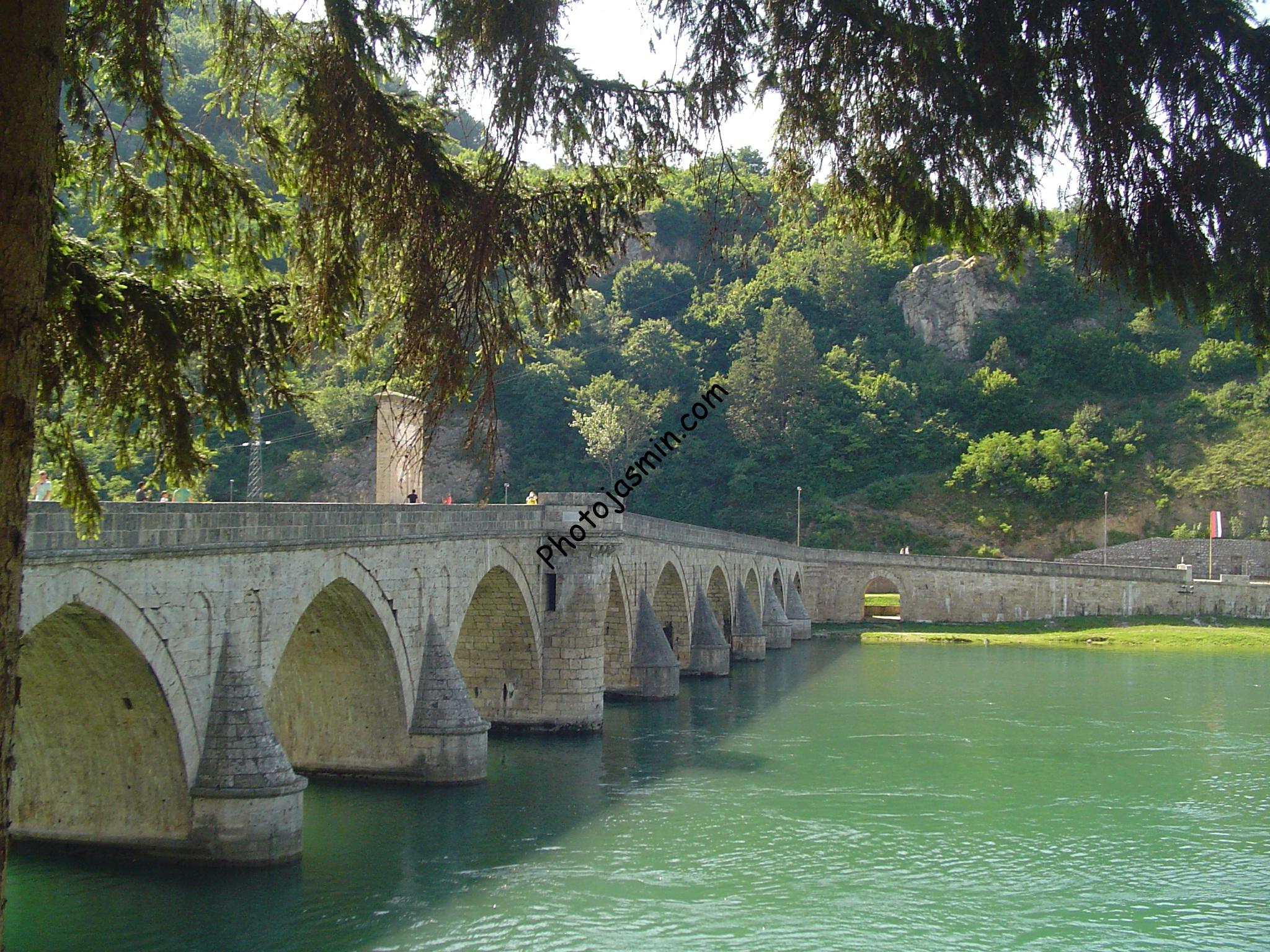
The bridge over the Drina River in Višegrad, Bosnia and Herzegovina, was visited in July 2019.
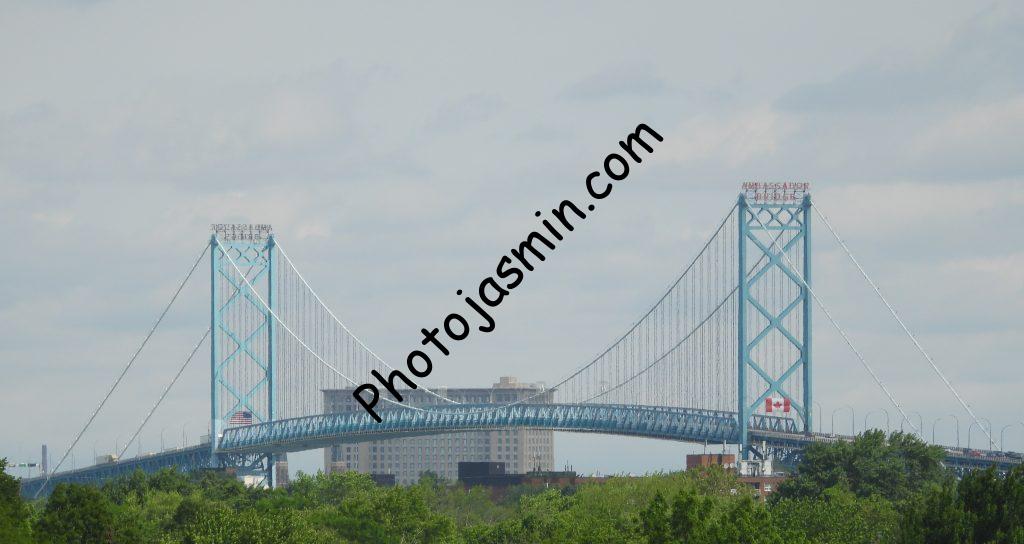
The Ambassador Bridge connects Windsor, Canada, and Detroit, Michigan, USA. This photo was taken from the Canadian side in May 2024.
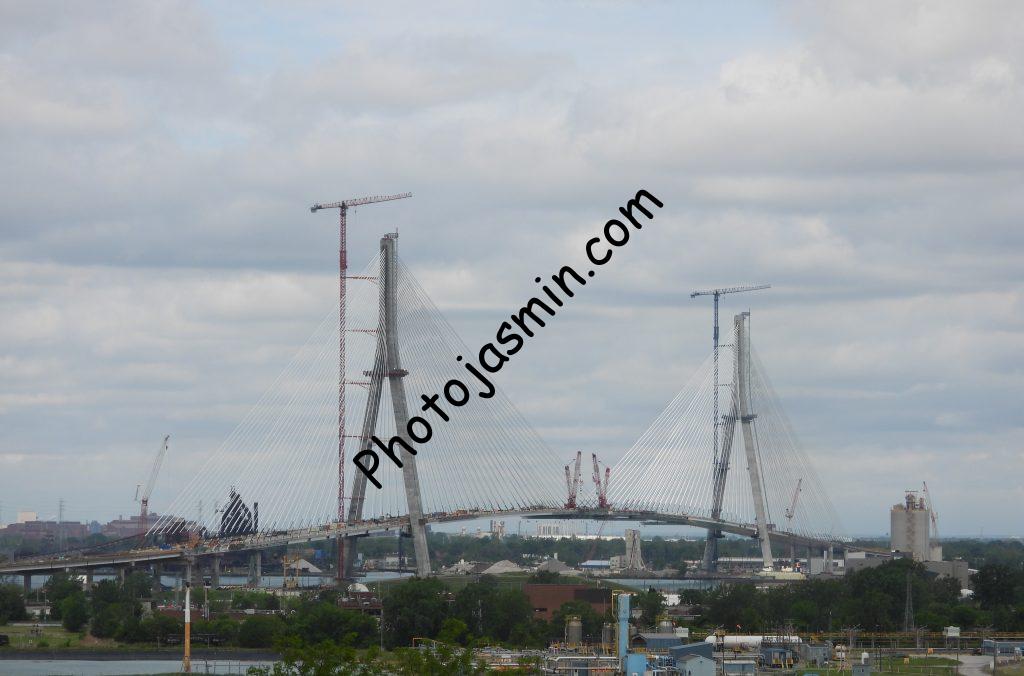
Construction of the new bridge between Windsor and Detroit, Gordie Howe International Bridge, Photo taken in May 2024.
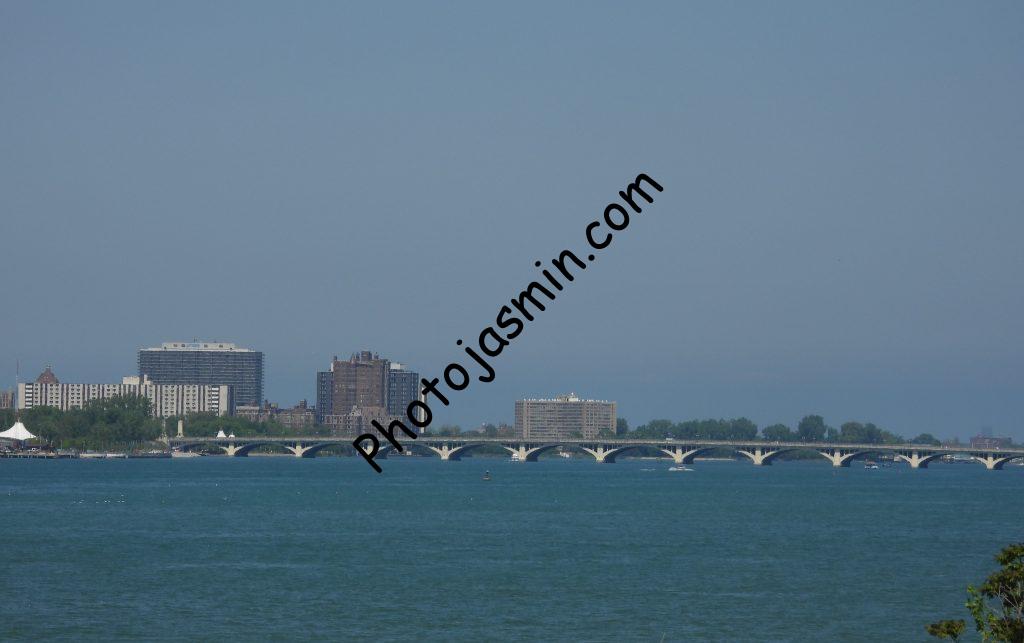
The MacArthur Bridge spans a channel of the Detroit River in Detroit, Michigan. The bridge, which features 19 total arches across 2,193 feet (668 m), provides main access between the city’s mainland and Belle Isle.